

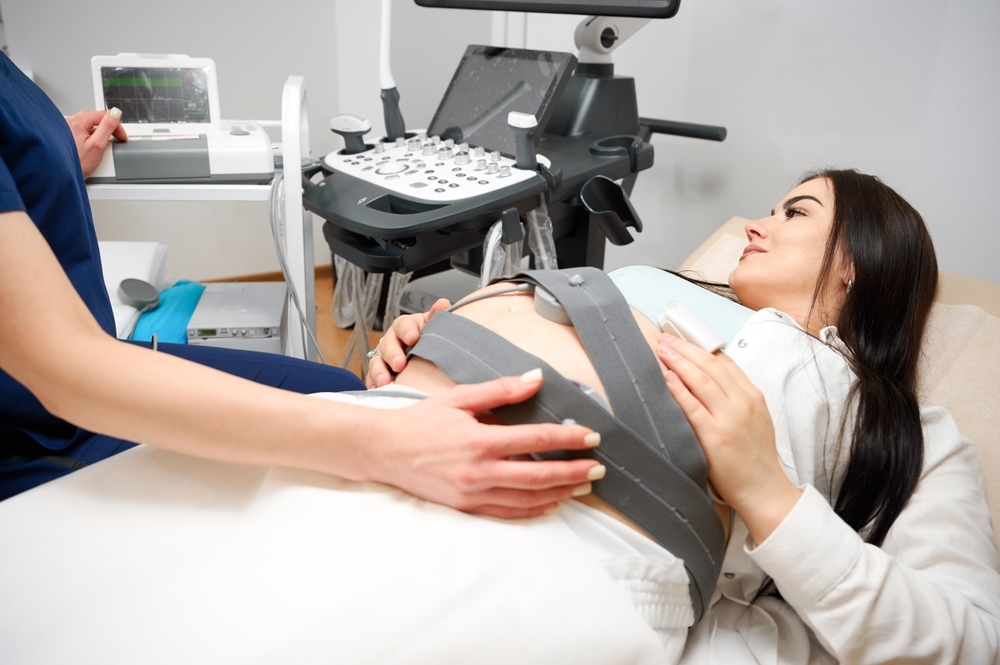
The moments leading up to the birth of a child are filled with a mix of exhaustion, excitement, and anticipation. During labor, parents rely heavily on their medical team to ensure that both mother and baby are safe. One of the most critical tools used in modern delivery rooms to ensure this safety is the Electronic Fetal Monitor (EFM).
To a parent, the fetal heart monitor is often just a steady thump-thump sound in the background or a scrolling line of zig-zags on a screen. But to a doctor or nurse, those lines are a vital window into the baby’s well-being. When those lines are read correctly, they can save a life. When they are misread or ignored, the consequences can be life-altering.
If your child was born with a neurological condition or physical disability, you might be wondering: Did the medical team miss something? The answer often lies in the fetal heart monitor strips.
What is Electronic Fetal Monitoring (EFM)?
Electronic Fetal Monitoring is the process of tracking the baby’s heart rate in relation to the mother’s contractions. This is typically done in two ways:
- External Monitoring: Sensors are strapped to the mother’s abdomen to pick up the baby’s heartbeat via ultrasound and the mother’s contractions via a pressure sensor.
- Internal Monitoring: If a more accurate reading is needed, a small electrode may be attached directly to the baby’s scalp while they are still in the birth canal.
The monitor produces a continuous printout, or a digital strip, that shows two lines. The top line tracks the baby’s heart rate (beats per minute), and the bottom line tracks the frequency and strength of the mother’s contractions.
The Language of the Strip: What Doctors Are Looking For
Medical professionals are trained to categorize fetal heart rate patterns into three categories:
- Category I (Normal): The baby is receiving plenty of oxygen and is reassuring.
- Category II (Indeterminate): The strip shows some concerning signs that require close observation and potential intervention.
- Category III (Abnormal): This is an emergency. It indicates that the baby is in distress and likely suffering from a lack of oxygen (hypoxia).
Key Red Flags on a Fetal Heart Strip
When analyzing these strips, doctors and nurses look for specific patterns:
- Variability: A healthy baby’s heart rate should fluctuate slightly (zig-zags). A flat line (low variability) can indicate the baby is in trouble.
- Tachycardia: A heart rate that is consistently too high (above 160 bpm).
- Bradycardia: A heart rate that is consistently too low (below 110 bpm).
- Decelerations: This is the most critical area for errors. Late decelerations, where the baby’s heart rate drops after a contraction begins and stays low, are a classic sign that the baby is not getting enough oxygen through the placenta.
Similar Post: Can Preventable Birth Injury Deaths Be Avoided With Better Protocols?
How a Misread Strip Leads to a Preventable Birth Injury
A birth injury is preventable when it occurs because a medical professional failed to act according to the accepted standard of care. In the context of fetal monitoring, negligence usually happens in one of three ways:
1. Failure to Recognize Distress
Modern labor wards are busy. Sometimes, a nurse or doctor may look at a Category II or III strip and incorrectly assume the baby is just sleeping or that the pattern isn’t serious enough to warrant action. By the time they realize the baby is in true distress, permanent damage may have already occurred.
2. Failure to Respond Timely
Recognizing the problem is only half the battle. If a strip shows that a baby is in distress, the medical team must act. This might mean repositioning the mother, giving oxygen, or, most importantly, ordering an emergency C-section. If the doctor waits two hours to perform a C-section that should have happened in twenty minutes, the baby may suffer prolonged oxygen deprivation.
3. Inadequate Staffing or Training
In some cases, the misreading happens because the person assigned to watch the monitors is spread too thin or lacks the proper training to identify subtle signs of fetal distress.
The Consequences: Life-Long Injuries
When a fetal heart monitor strip is misread and the baby is left in a state of oxygen deprivation (hypoxia), the brain is the first organ to suffer. This can lead to several devastating conditions:
- HIE (Hypoxic-Ischemic Encephalopathy): A type of brain damage caused by a lack of oxygen and blood flow to the brain.
- Cerebral Palsy (CP): A group of disorders that affect a child’s ability to move and maintain balance and posture, often caused by brain injury during birth.
- Seizure Disorders: Oxygen deprivation can cause electrical short circuits in the brain, leading to epilepsy or chronic seizures.
- Developmental Delays: Cognitive impairments that may not become fully apparent until the child reaches school age.
Similar Post: Signs of a Birth Injury Parents Often Miss in the First Year
Why You Need a Legal Review of the Hospital Records
Hospital records are complex, and fetal heart monitor strips are notoriously difficult for the average layperson to interpret. Furthermore, hospitals are not always transparent when a mistake is made. They may tell you that your child’s injury was unavoidable or due to genetics, when the heart monitor strips actually tell a very different story.
An experienced birth injury lawyer works with medical experts to re-read your labor strips. These experts can pinpoint exactly when the baby began to show signs of distress and whether the doctor’s failure to act was a breach of medical duty.
Your Child’s Future Matters
The financial cost of raising a child with a birth injury can be staggering. From 24/7 nursing care and physical therapy to specialized equipment and home modifications, the lifetime costs often reach into the millions of dollars. A successful medical malpractice claim ensures that your child has the resources they need to live the most comfortable and fulfilling life possible.
Similar Post: Your Baby Was Sent To The NICU After Delivery: Questions To Ask And Records To Request Right Away
Contact Anapol Weiss: Nationwide Birth Injury Advocates
If your child was diagnosed with a brain injury, Cerebral Palsy, or HIE, the time to act is now. Birth injury cases are subject to a statute of limitations, meaning there is a limited window of time in which you can file a claim.
At Anapol Weiss, our birth injury team, led by experienced litigators like Kila Baldwin and Paola Pearson, has spent decades holding hospitals and doctors accountable for misreading fetal heart monitor strips and ignoring fetal distress. We have recovered billions of dollars for families, helping them secure the medical care and financial stability their children deserve.
Why Choose Us?
- Proven Results: We have a track record of multi-million dollar verdicts and settlements in birth injury cases.
- No Upfront Costs: We work on a contingency fee basis. You pay nothing unless we win your case.
- Expert Network: We partner with the nation’s leading OB-GYNs and pediatric neurologists to build the strongest case possible.
Your story matters, and your child’s future is worth fighting for.
Call us today at 866-944-0553 or contact us online to schedule your free, confidential consultation. Let us help you find the answers and the justice your family deserves.
Disclaimer: This blog is intended for informational purposes only and does not establish an attorney-client relationship. It should not be considered as legal advice. For personalized legal assistance, please consult our team directly.